Up to 20 kg per tray
Engineered only after product-specific material selection, prototype approval and load testing.
A premium reinforced corrugated PDQ tray engineered for stacked mass-retail merchandising and product loads up to 20 kg per tray, subject to approved material specification, prototype and load test. Three bottom locking tabs connect each tray to the unit below, while reinforced side rails and hand holes support handling.
Also searched as: stackable PDQ display · stacking display tray · heavy-duty PDQ tray · mass-retail stacking tray
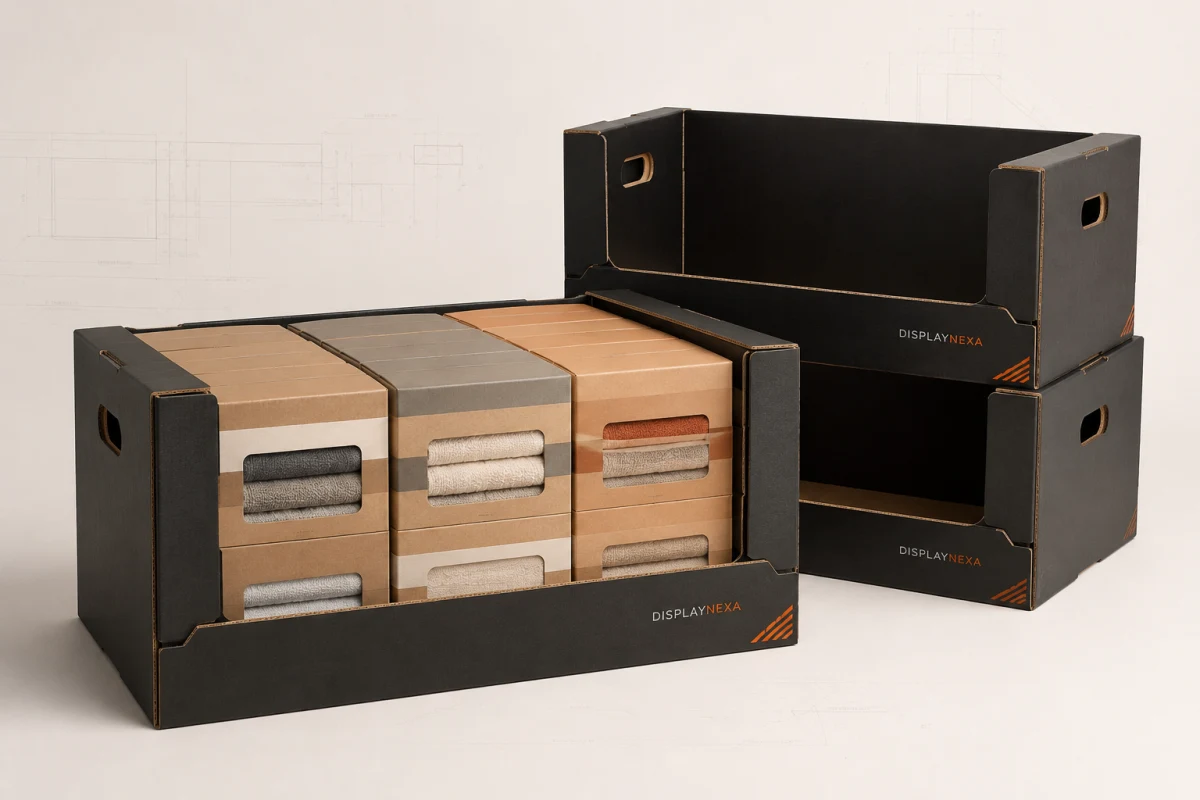
A heavy-duty stackable PDQ tray is a product-specific retail-ready corrugated tray, not a loose-fill dump bin. Each unit forms a supported shelf or bin, and three locking tabs under the base locate it on the tray below. Board grade, reinforcement, footprint and finish are engineered around the product and validated by prototype and load testing.
This is a stacked PDQ merchandising system—not a loose-fill dump bin. Every load claim depends on the approved project specification and test.
Engineered only after product-specific material selection, prototype approval and load testing.
Three integrated tabs locate and connect each tray to the unit below for a repeatable stacked presentation.
Wrapped side rails and integrated hand holes support store handling and replenishment.
Board grade, print method, finish and reinforcement can be cost-engineered for the required programme.
The structure combines a supported product tray, reinforced handling rails and a three-point connection to the unit below.
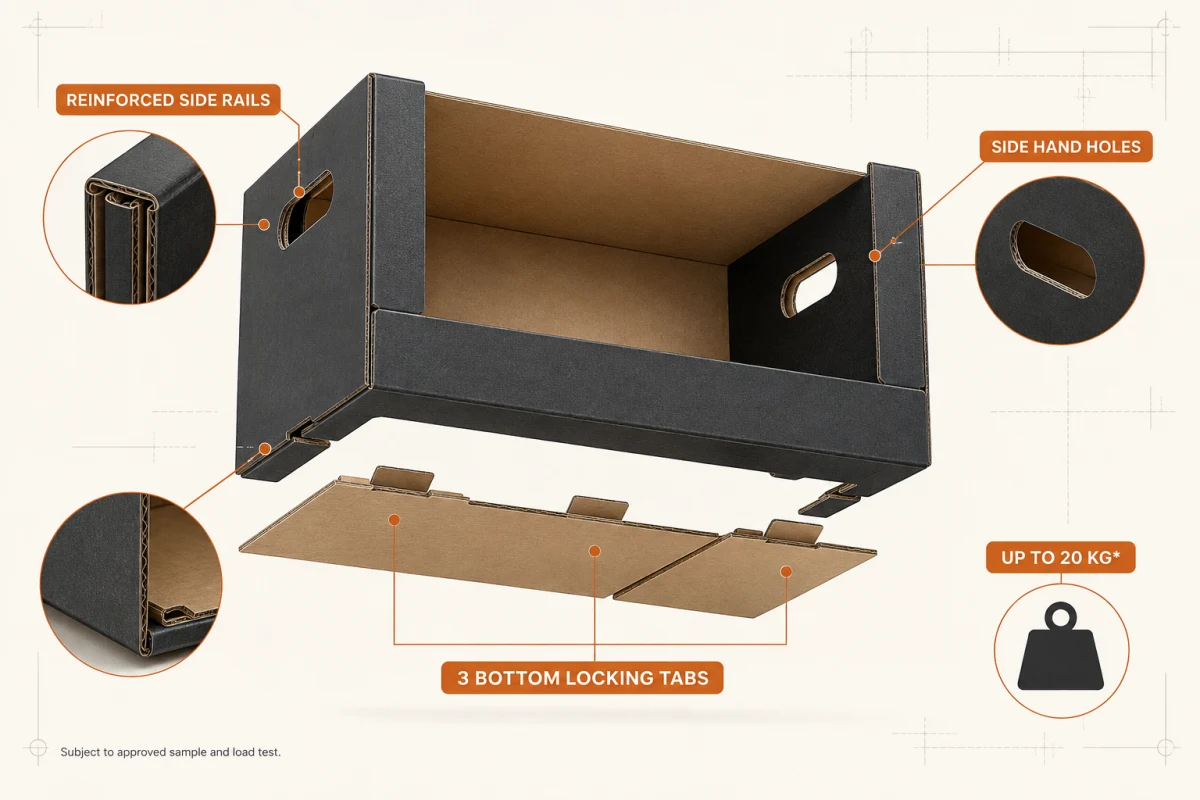
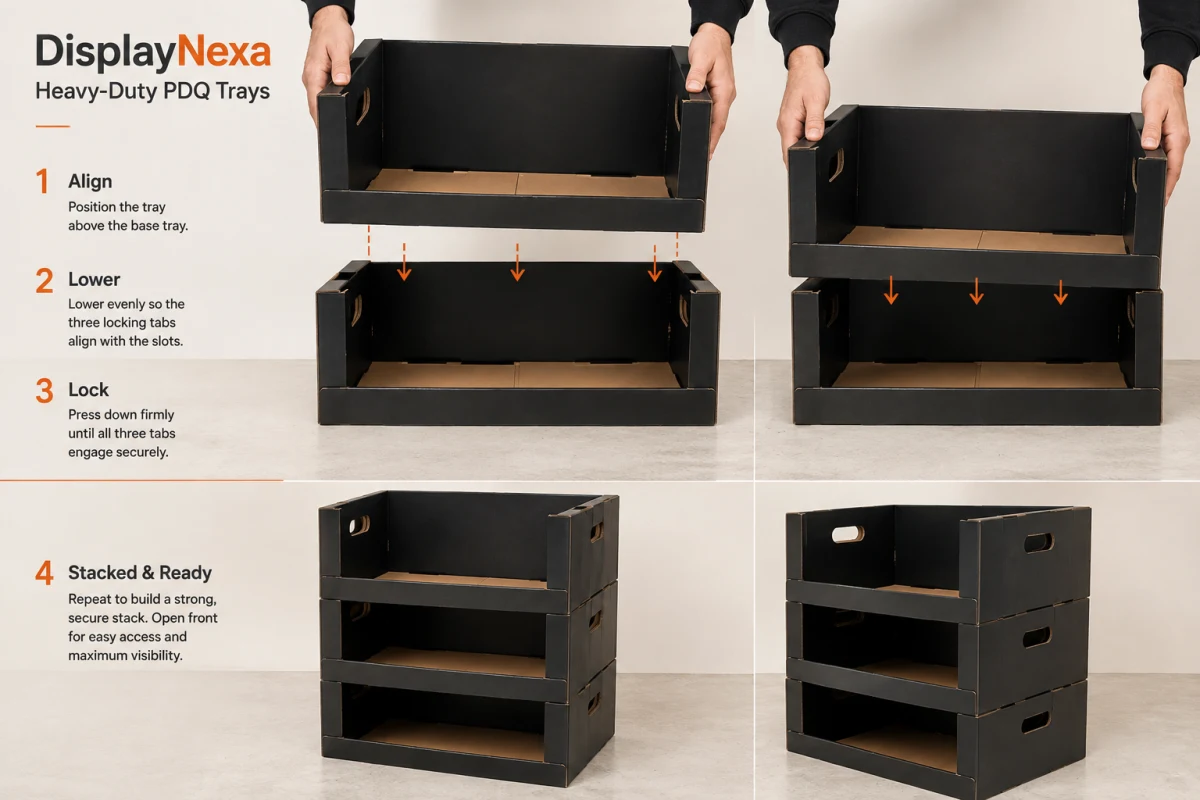
Illustrative DisplayNexa concept imagery. Final dimensions, board specification, stack height and graphics are confirmed for each project.
This solution is best suited for bulky or heavy products in mass-retail, club-store and supermarket programmes that need a stackable, pre-packed presentation with fast floor setup.
These are configurable inputs, not fixed catalogue claims. Final specifications are confirmed in the approved project brief and sample for each customer.
Selected production-partner imagery shows the practical steps behind a DisplayNexa programme. The applicable factory, equipment, inspection plan and capacity are confirmed for each project.
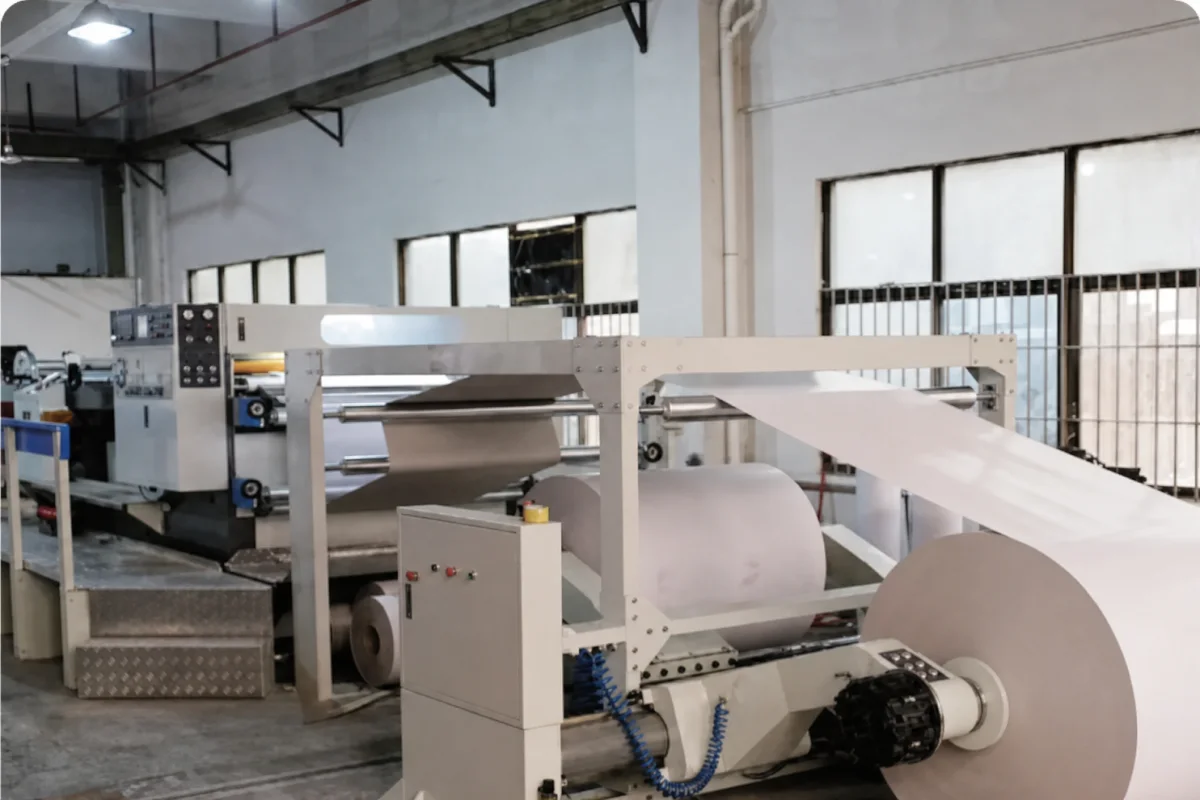
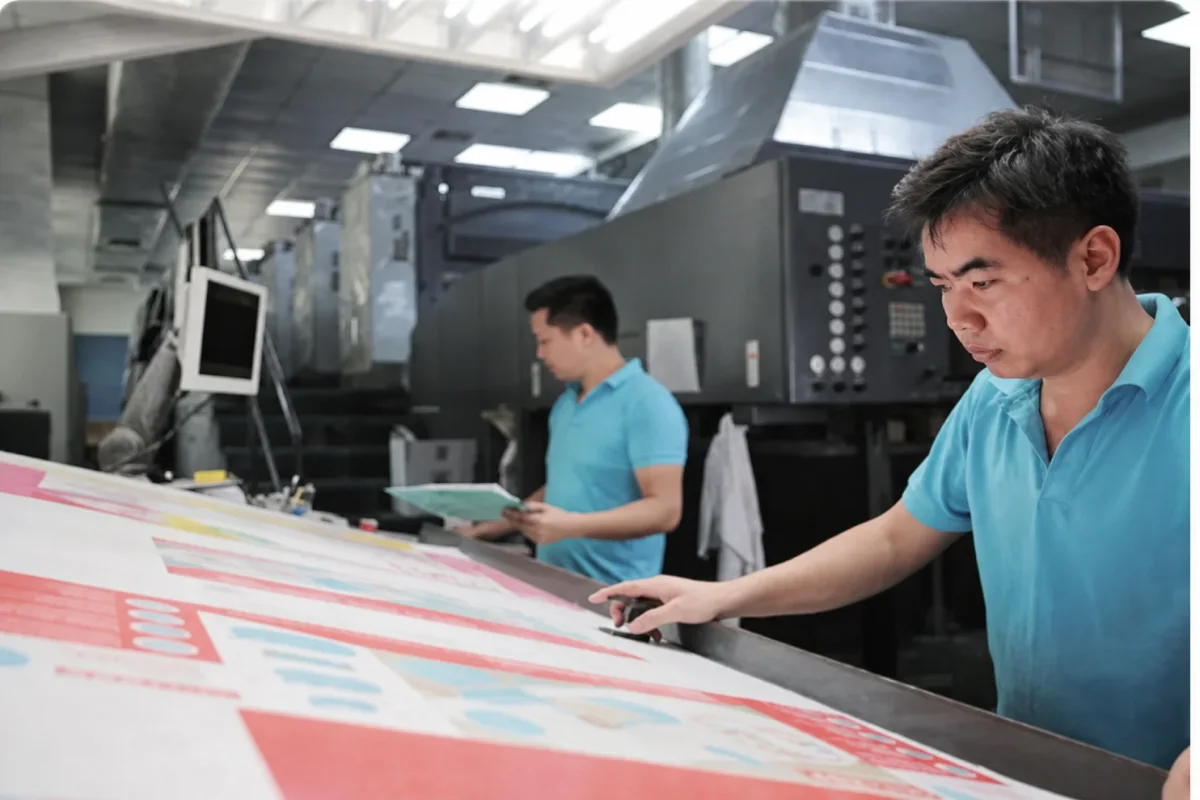
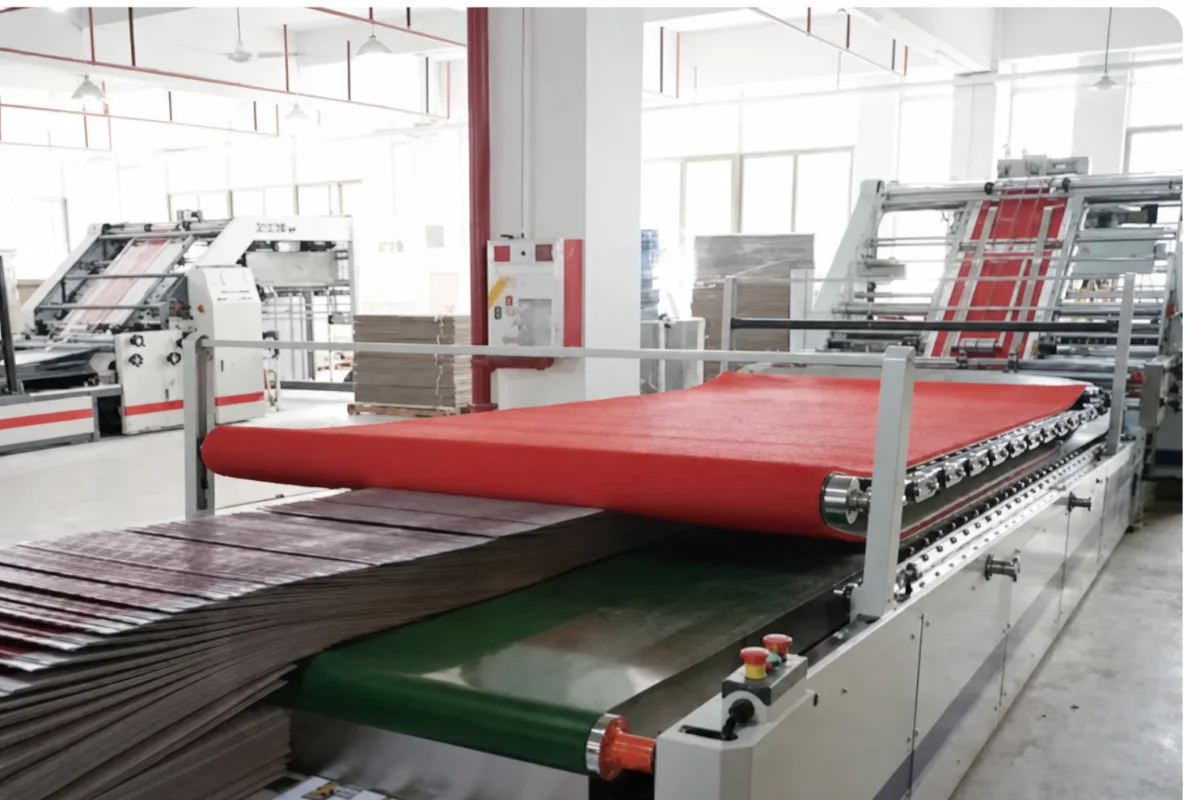
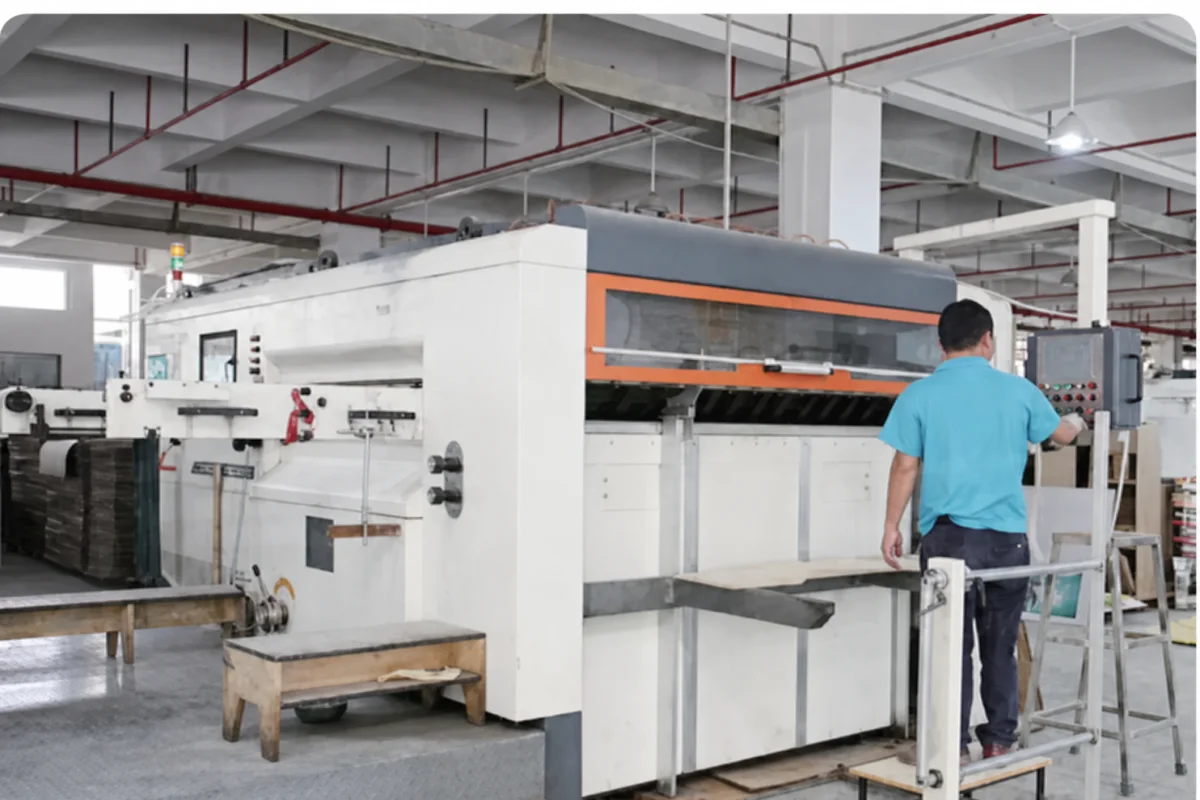
Production route and controls are matched to the approved material, print, quantity, pack-out and delivery brief.
Free unprinted structural sample — target ready in about 2 working days after the product data and structure are confirmed. Courier freight and complex printed prototypes are confirmed separately.
Timing begins after the technical brief is complete.Structure and placement often overlap. These routes provide useful alternatives for the same brief.
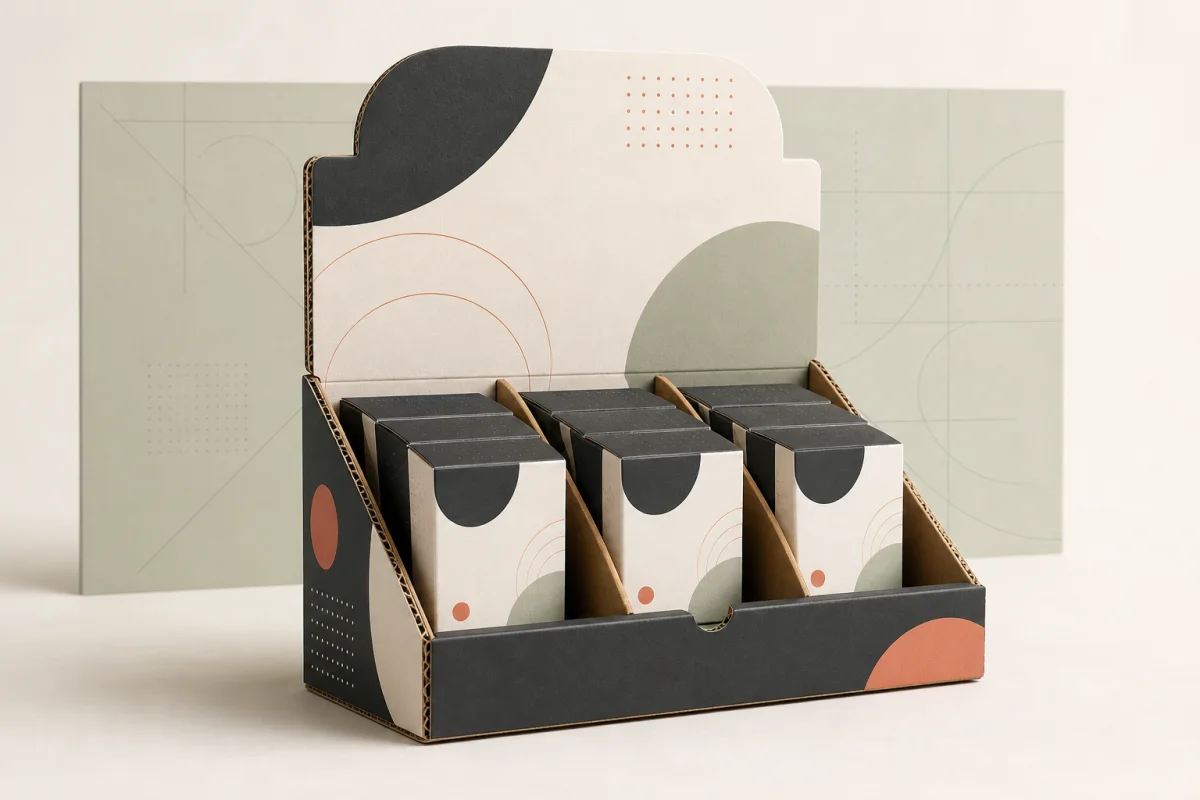
Custom Corrugated PDQ Display projects are developed for checkout zones, retail shelves, pharmacies, cosmetics, product launches. Size, structure, graphics, product configuration and packing are confirmed against the customer's requirements rather than treated as fixed catalogue specifications.
View solution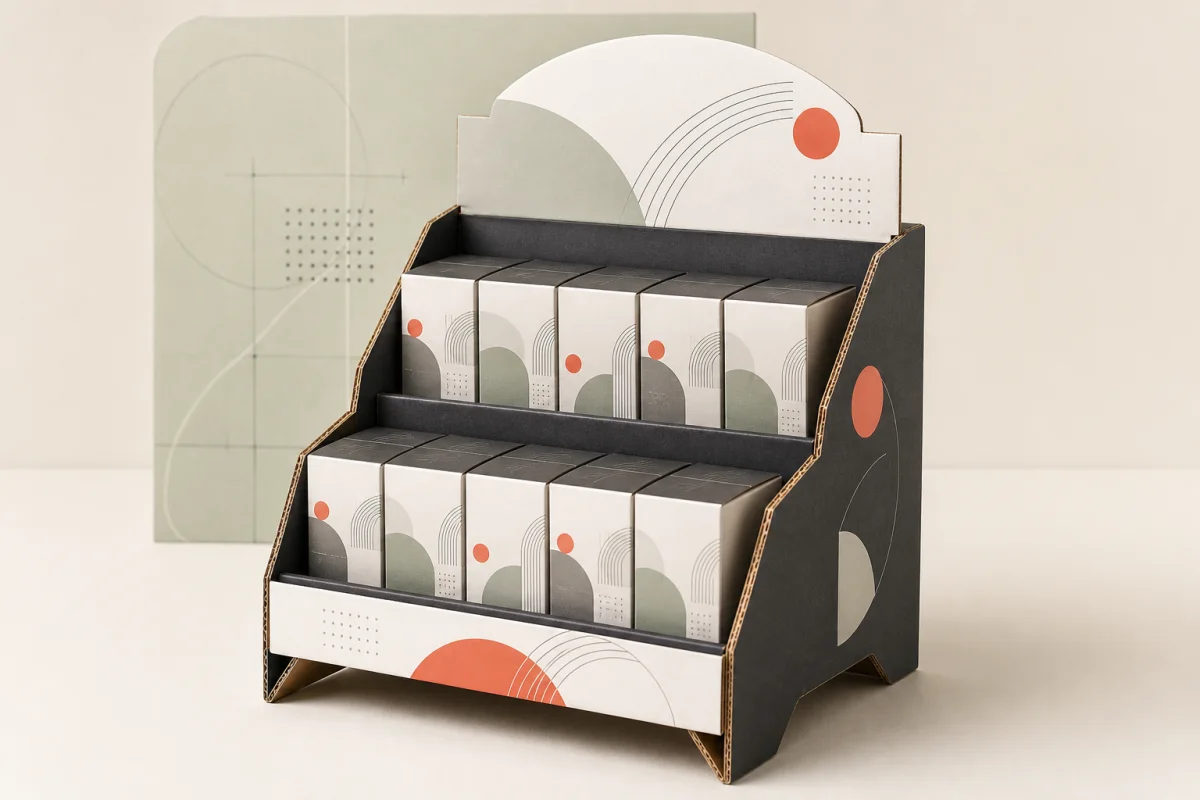
Countertop PDQ Display projects are developed for checkout zones, retail shelves, pharmacies, cosmetics, product launches. Size, structure, graphics, product configuration and packing are confirmed against the customer's requirements rather than treated as fixed catalogue specifications.
View solution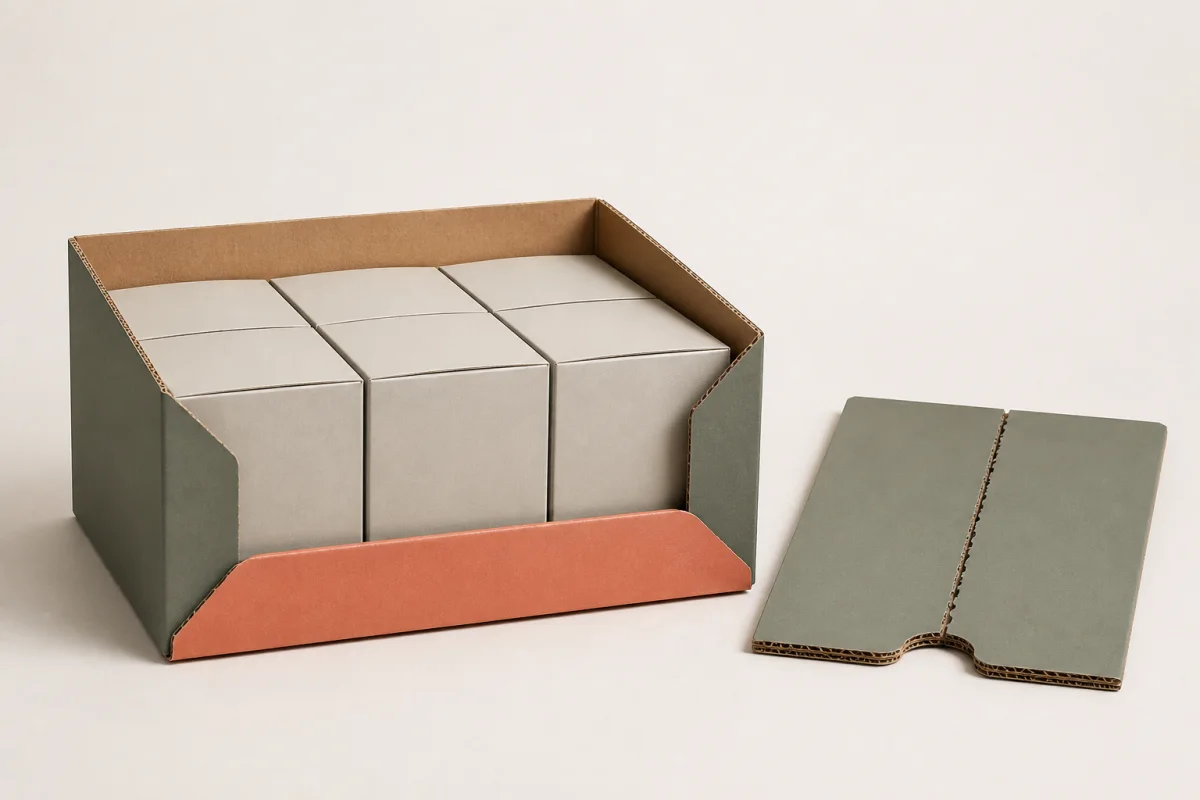
Shelf Ready Packaging projects are developed for supermarkets, grocery, pharmacies, convenience stores, high-sku replenishment. Size, structure, graphics, product configuration and packing are confirmed against the customer's requirements rather than treated as fixed catalogue specifications.
View solution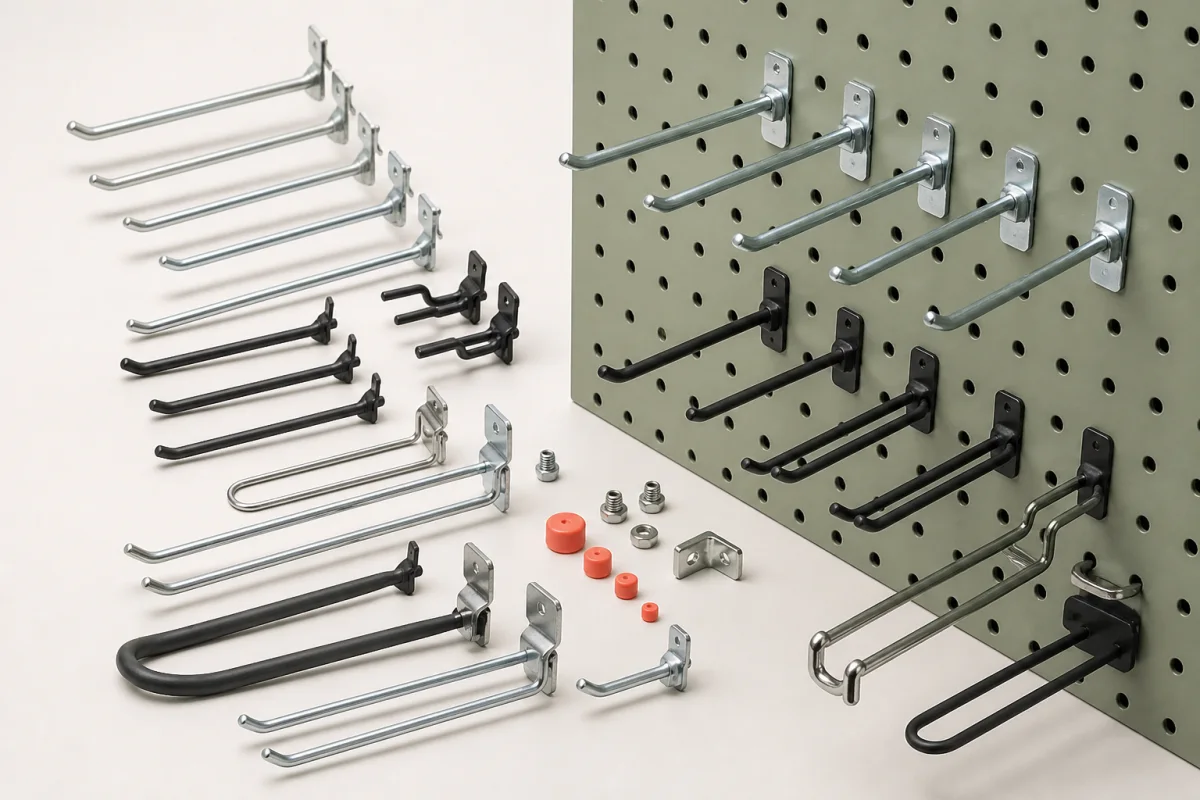
Retail Display Hooks projects are developed for shelf systems, peg displays, product organization, signage, display reinforcement. Size, structure, graphics, product configuration and packing are confirmed against the customer's requirements rather than treated as fixed catalogue specifications.
View solutionRequirements vary by product, retailer and programme. These are the practical starting points.
The tray can be engineered for product loads up to 20 kg per tray. Final capacity is confirmed only after the product, board specification, reinforcement, prototype and load test are approved for the project.
Three integrated locking tabs under each tray align with the tray below. The tab geometry, board grade and loaded stack height are validated on the project prototype before production.
Yes. Dimensions, shelves, compartments, hooks, headers, dividers, trays, reinforcement and graphics can be developed around the project requirements.
Yes. Full, half and quarter pallet concepts can be reviewed for warehouse-club and high-volume retail environments according to the customer's and retailer's requirements.
Product loading, kitting, semi-assembly and retail-ready pack-out can be coordinated where the product, factory flow and programme requirements make it suitable.
Depending on the project, options can include corrugated board, paperboard, plastic, acrylic, PVC, PET, PP, metal, wire, wood, MDF and mixed-material structures.
Yes. Prototype or sample development is available so fit, assembly, presentation and packing can be evaluated before mass production.
Quality inspection can be coordinated for dimensions, structure, print, assembly, packing, quantity and other project-specific checkpoints.
MOQ is project dependent and varies with structure, material, print process, product loading and production requirements. Request a project-specific quotation.
Lead time depends on structural development, prototyping, materials, printing, quantity, product loading and approval timing. A project schedule is provided after review.
Send the product dimensions, weight, SKU count, quantity, retail environment and target date. Early-stage briefs are welcome.